The oil industry faces a dual mandate: meet ongoing energy needs while sharply reducing greenhouse-gas intensity across the value chain. This balance is driving rapid operational change, new commercial models, and greater collaboration with governments and financial markets. Operators that act decisively can cut costs, reduce regulatory risk, and capture market share in low-carbon products.
Key technology and operational levers
– Methane detection and elimination: Continuous monitoring using infrared cameras, drones, and satellite data is transforming leak detection. Rapid-response repair programs and improved equipment standards reduce fugitive emissions and flaring losses, improving both environmental performance and bottom-line recovery of valuable gas.
– Carbon capture, utilization and storage (CCUS): CCUS remains the most scalable way to lower emissions from hydrocarbon processing and heavy industrial sites. Projects that integrate capture with enhanced oil recovery or permanent storage can monetize CO2 while extending asset life. Modular, lower-cost capture solutions are making CCUS viable at a range of facility sizes.
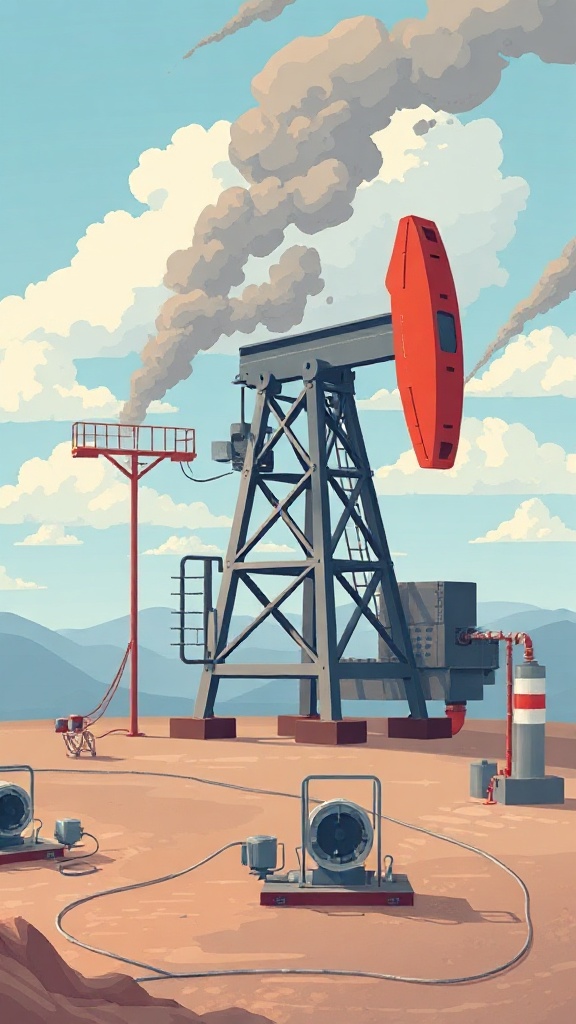
– Electrification and low-carbon power: Electrifying pumps, compressors and other field equipment—combined with on-site renewables or low-carbon grid power—reduces on-site combustion emissions. Floating platforms and remote facilities are increasingly candidates for shore-based power links or hybrid renewable setups to cut fuel consumption and maintenance costs.
– Product decarbonization and fuels transition: Refiners and marketers are investing in lower-carbon fuels, bio-blends, and synthetic fuels made from captured CO2 and low-carbon hydrogen.
These products meet customer demand for lower carbon intensity while leveraging existing logistics and retail networks.
– Digitalization for efficiency and safety: Advanced analytics and real-time monitoring optimize production, reduce downtime, and improve safety. Digital twins and predictive maintenance extend equipment life and reduce unplanned emissions events. These tools also support better emissions accounting and transparency.
Commercial strategies and capital allocation
Companies are reallocating capital toward projects that improve emissions intensity and provide resilient returns. That includes retrofits on existing assets, selective investment in new developments with low break-even costs, and partnerships to share CCUS and hydrogen infrastructure costs. Transparent carbon-intensity reporting and credible, near-term emission-reduction targets are increasingly material to financing availability and the cost of capital.
Regulatory and stakeholder dynamics
Regulators, insurers and large purchasers press for measurable emission reductions and independent verification. Supply-chain decarbonization demands—particularly from major industrial and aviation customers—are creating premium markets for low-carbon products.
Proactive engagement with communities and regulators helps de-risk projects and accelerates permitting for shared infrastructure like CO2 pipelines and hubs.
Workforce and decommissioning considerations
Transitioning operations requires new skill sets in fields such as subsurface storage, process electrification and emissions monitoring. Investing in reskilling and safety culture is essential. As older fields reach end of life, the decommissioning market presents both liabilities and opportunities: responsibly executed plug-and-abandon and rig removal programs can create new service-demand and repurpose infrastructure for energy transition purposes.
Actionable priorities for oil companies
– Implement continuous methane monitoring and prioritize rapid repair programs.
– Assess CCUS opportunities at carbon-intense sites and pursue shared infrastructure with regional partners.
– Electrify field operations where feasible and integrate renewables at remote sites.
– Diversify product portfolios with low-carbon fuels and hydrogen pathways aligned to market demand.
– Strengthen emissions reporting, pursue third-party verification, and link corporate targets to investment decisions.
The industry’s trajectory is shaped by economics, technology and policy in equal measure. Companies that reduce emissions while improving operational efficiency position themselves to thrive as energy systems evolve, capture new revenue streams from low-carbon products, and manage tightening regulatory and investor expectations.