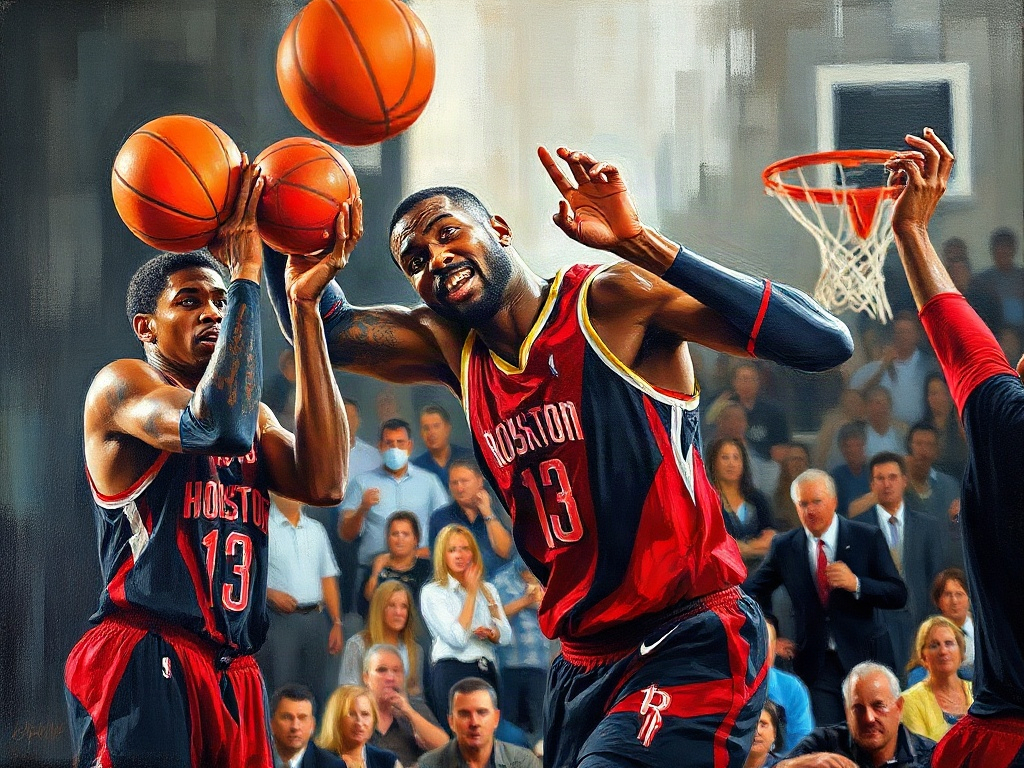
The Houston Rockets are building a narrative that blends young talent, analytics-driven strategy, and a fast-paced brand of basketball that appeals to players and fans alike. With a core that combines high-end scoring, playmaking from unconventional positions, and a clear emphasis on spacing, the franchise is focused on turning potential into sustained competitiveness.
Core identity and playing style
At the heart of the roster is a dynamic scorer who thrives in isolation and transition, paired with a skilled playmaking big who can create from the post and the high pick-and-roll. That pairing shapes an offense built around pace, floor spacing, and liberal three-point looks. Ball movement and reads off screens are staples, and coaches prioritize spacing to open lanes for drives and kick-outs. The Rockets often pursue lineups that force opposing defenses to cover the perimeter while still maintaining interior passing and offensive rebounding.
Defense as the missing piece
Defensive consistency has been the area most cited as the next hurdle. The organization is working to instill system principles—communication, switchability, and help-side rotations—while adding personnel who can guard multiple positions and protect the rim. When the team pairs its offensive firepower with reliable defensive rotations and cohesive team rebounding, it becomes a more dangerous and sustainable unit.
Player development and the pipeline
Player development is central to the Rockets’ long-term plan. The G League affiliate remains a critical resource for minutes, skill refinement, and on-court learning for young prospects. Emphasis on individualized development plans—shooting mechanics, finishing through contact, decision-making in late-clock situations—helps accelerate readiness. The front office also looks to supplement internal growth with veteran wings and defensive-minded role players who can provide stability.
Front office strategy and roster construction
The franchise favors flexibility: keeping draft capital and salary space to pursue trades for complementary veterans or to move up in drafts if necessary. An analytics-informed approach guides personnel decisions, lineup adjustments, and shot selection, with three-point percentage, turnover rate, and assist-to-turnover ratios used as key evaluation metrics. The aim is a roster balanced between shot creators, high-efficiency shooters, and positionally versatile defenders.
Fan experience and community connection
Home games at the arena emphasize atmosphere—fast possessions, highlight plays, and an active fan base that feeds off the team’s energy.
Community outreach programs and youth basketball clinics maintain strong local ties, cultivating the next generation of fans while supporting player development pipelines in the region.
What to watch next
Progress will be measured by incremental improvements: better defensive rating, fewer late-game turnovers, improved three-point accuracy, and deeper bench contributions. If young stars continue to develop and the front office secures the right complementary pieces, the team’s pace-and-space identity could translate into sustained success.
Why it matters
The Rockets are a blend of modern NBA trends—positionless play, high-value shooting, and data-informed decision-making—anchored by promising young talent and a clear developmental focus. For fans and prospective free agents, that combination signals an organization intent on building a competitive, entertaining team with flexibility to adapt as opportunities arise.